The search has to be between 2 and 50 characters

Advertisement
Advertisement
Advertisement

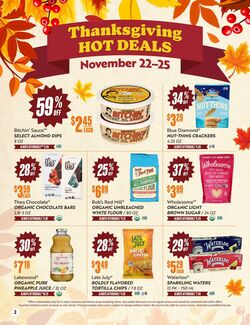
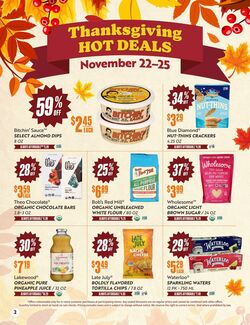
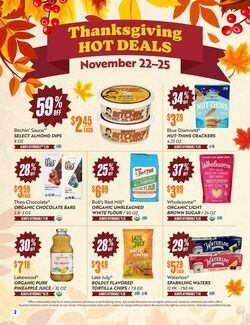
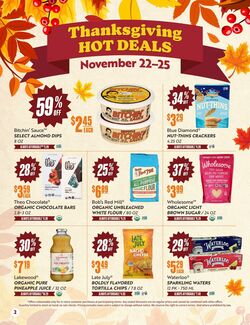
Current weekly ad Natural Grocers - Valid from 07/09 to 08/19 - Page nb 16

Advertisement
Advertisement
Advertisement


Advertisement
Weekly ad Natural Grocers 07/09/2025 - 08/19/2025
Weekly ad Aldi - In Store Ad Jun 3, 2026 - Jun 9, 2026
Aldi - In Store Ad
Jun 3, 2026 - Jun 9, 2026
Weekly ad Rural King - Circular Mar 1, 2026 - Jun 26, 2026
Rural King - Circular
Mar 1, 2026 - Jun 26, 2026
Weekly ad Rural King - Circular Mar 1, 2026 - Jun 26, 2026
Rural King - Circular
Mar 1, 2026 - Jun 26, 2026
Weekly ad Rural King - Circular Mar 1, 2026 - Jun 26, 2026
Rural King - Circular
Mar 1, 2026 - Jun 26, 2026
See next flyer
Advertisement
Advertisement


Advertisement

Products in this weekly ad

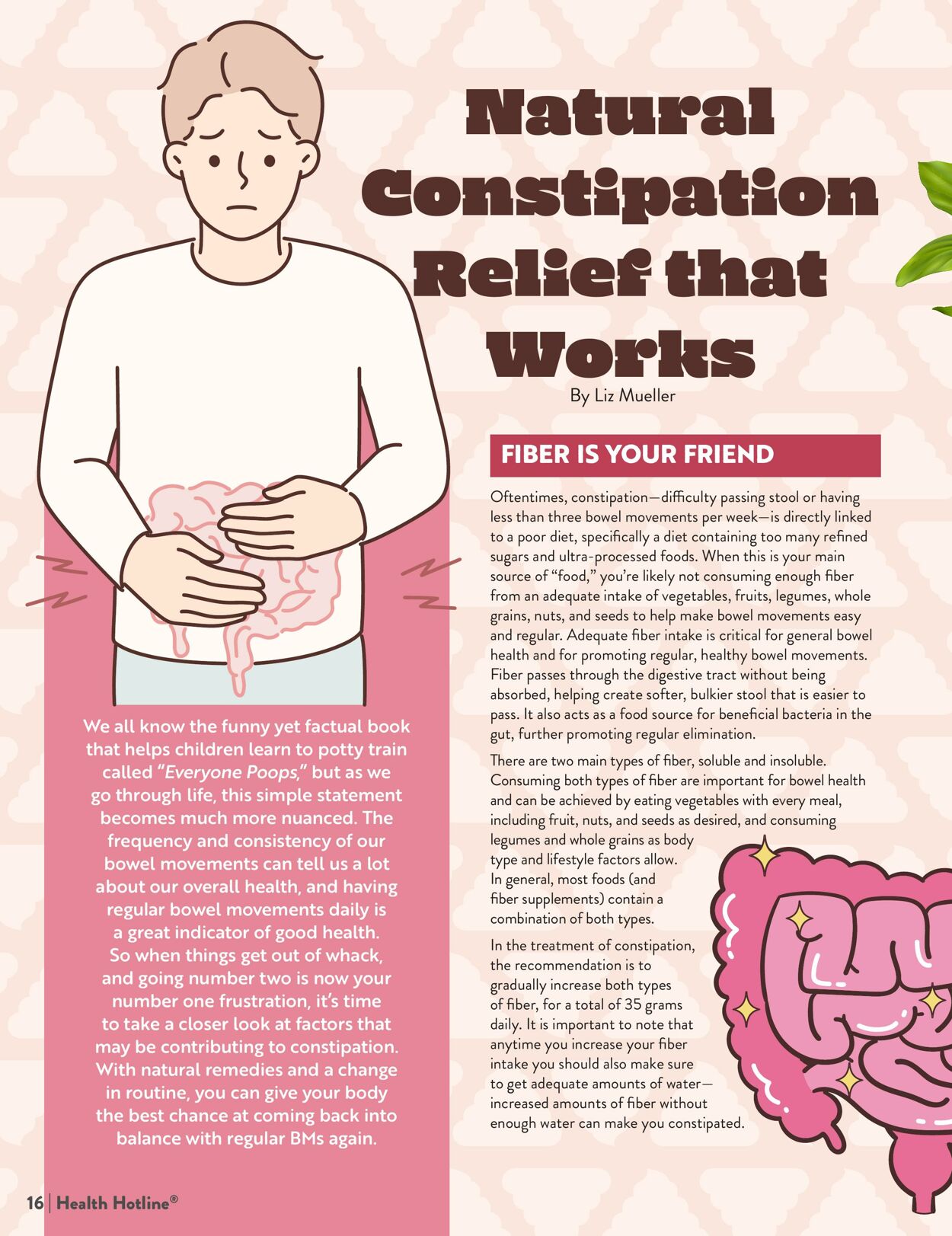
16 | Health Hotline® Constipation * Rekiefthat 4 By Liz Mueller Oftentimes, constipation—difficulty passing stool or having less than three bowel movements per week—is directly linked toa poor diet, specifically a diet containing too many refined sugars and ultra-processed foods. When this is your main source of “food,” you're likely not consuming enough fiber from an adequate intake of vegetables, fruits, legumes, whole grains, nuts, and seeds to help make bowel movements easy and regular. Adequate fiber intake is critical for general bowel health and for promoting regular, healthy bowel movements. Fiber passes through the digestive tract without being absorbed, helping create softer, bulkier stool that is easier to pass. It also acts as a food source for beneficial bacteria in the gut, further promoting regular elimination. There are two main types of fiber, soluble and insoluble. Consuming both types of fiber are important for bowel health and can be achieved by eating vegetables with every meal, including fruit, nuts, and seeds as desired, and consuming legumes and whole grains as body type and lifestyle factors allow. In general, most foods (and fiber supplements) contain a combination of both types. In the treatment of constipation, the recommendation is to gradually increase both types of fiber, for a total of 35 grams daily. It is important to note that anytime you increase your fiber intake you should also make sure to get adequate amounts of water— increased amounts of fiber without enough water can make you constipated.


Latest weekly ads

Advertisement
16 | Health Hotline® Constipation * Rekiefthat 4 By Liz Mueller Oftentimes, constipation—difficulty passing stool or having less than three bowel movements per week—is directly linked toa poor diet, specifically a diet containing too many refined sugars and ultra-processed foods. When this is your main source of “food,” you're likely not consuming enough fiber from an adequate intake of vegetables, fruits, legumes, whole grains, nuts, and seeds to help make bowel movements easy and regular. Adequate fiber intake is critical for general bowel health and for promoting regular, healthy bowel movements. Fiber passes through the digestive tract without being absorbed, helping create softer, bulkier stool that is easier to pass. It also acts as a food source for beneficial bacteria in the gut, further promoting regular elimination. There are two main types of fiber, soluble and insoluble. Consuming both types of fiber are important for bowel health and can be achieved by eating vegetables with every meal, including fruit, nuts, and seeds as desired, and consuming legumes and whole grains as body type and lifestyle factors allow. In general, most foods (and fiber supplements) contain a combination of both types. In the treatment of constipation, the recommendation is to gradually increase both types of fiber, for a total of 35 grams daily. It is important to note that anytime you increase your fiber intake you should also make sure to get adequate amounts of water— increased amounts of fiber without enough water can make you constipated.

Advertisement
Advertisement
Advertisement
Advertisement

If you continue to browse this website, you accept the use of cookies.

Name Details