The search has to be between 2 and 50 characters

Advertisement
Advertisement
Advertisement

Current weekly ad Natural Grocers - Valid from 10/30 to 11/27 - Page nb 30

Advertisement
Advertisement
Advertisement


Advertisement
Weekly ad Natural Grocers 10/30/2025 - 11/27/2025
Weekly ad Rural King - Circular Mar 1, 2026 - Jun 26, 2026
Rural King - Circular
Mar 1, 2026 - Jun 26, 2026
Weekly ad Rural King - Circular Mar 1, 2026 - Jun 26, 2026
Rural King - Circular
Mar 1, 2026 - Jun 26, 2026
Weekly ad Rural King - Circular Mar 1, 2026 - Jun 26, 2026
Rural King - Circular
Mar 1, 2026 - Jun 26, 2026
Weekly ad Rural King - Circular Mar 1, 2026 - Jun 26, 2026
Rural King - Circular
Mar 1, 2026 - Jun 26, 2026
See next flyer
Advertisement
Advertisement


Advertisement

Products in this weekly ad

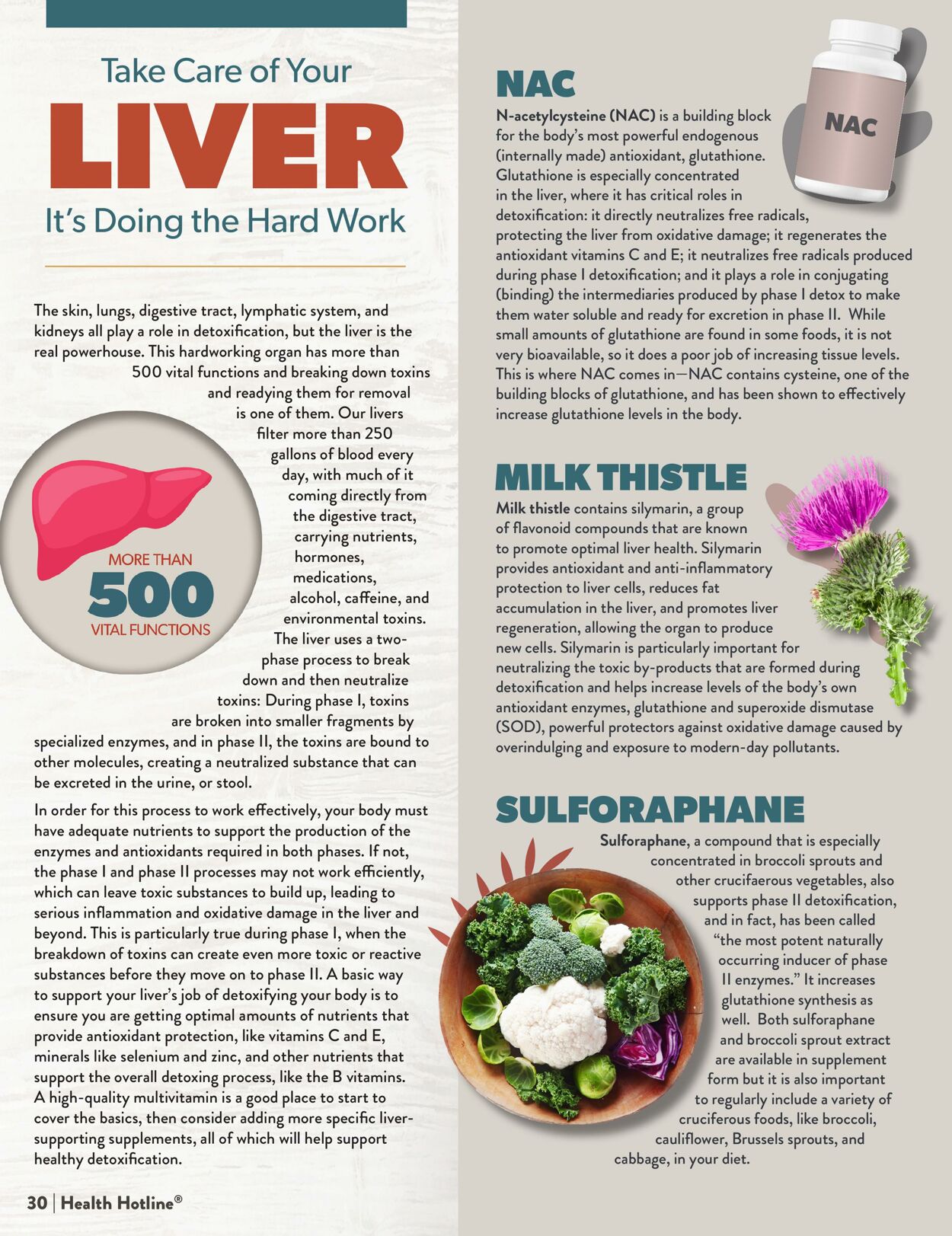
Take Care of Your LIVER It’s Doing the Hard Work The skin, lungs, digestive tract, lymphatic system, and kidneys all play a role in detoxification, but the liver is the real powerhouse. This hardworking organ has more than 500 vital functions and breaking down toxins and readying them for removal is one of them. Our livers filter more than 250 gallons of blood every day, with much of it coming directly from the digestive tract, carrying nutrients, MORE THAN hormones, medications, alcohol, caffeine, and VITALFUNCTIONS environmental toxins. J The liver uses a two- ~ » Pe) phase process to break E down and then neutralize toxins: During phase I, toxins are broken into smaller fragments by specialized enzymes, and in phase II, the toxins are bound to other molecules, creating a neutralized substance that can be excreted in the urine, or stool. In order for this process to work effectively, your body must have adequate nutrients to support the production of the enzymes and antioxidants required in both phases. If not, the phase | and phase II processes may not work efficiently, which can leave toxic substances to build up, leading to serious inflammation and oxidative damage in the liver and beyond. This is particularly true during phase |, when the breakdown of toxins can create even more toxic or reactive substances before they move on to phase II. A basic way to support your liver’s job of detoxifying your body is to ensure you are getting optimal amounts of nutrients that provide antioxidant protection, like vitamins C and E, minerals like selenium and zinc, and other nutrients that support the overall detoxing process, like the B vitamins. A high-quality multivitamin is a good place to start to cover the basics, then consider adding more specific liver- supporting supplements, all of which will help support healthy detoxification. 30 | Health Hotline® NAC N-acetylcysteine (NAC) is a building block for the body’s most powerful endogenous (internally made) antioxidant, glutathione. Glutathione is especially concentrated in the liver, where it has critical roles in detoxification: it directly neutralizes free radicals, protecting the liver from oxidative damage; it regenerates the antioxidant vitamins C and E; it neutralizes free radicals produced during phase | detoxification; and it plays a role in conjugating (binding) the intermediaries produced by phase | detox to make them water soluble and ready for excretion in phase II. While small amounts of glutathione are found in some foods, it is not very bioavailable, so it does a poor job of increasing tissue levels. This is where NAC comes in—NAC contains cysteine, one of the building blocks of glutathione, and has been shown to effectively increase glutathione levels in the body. MILK THISTLE Milk thistle contains silymarin, a group of flavonoid compounds that are known to promote optimal liver health. Silymarin provides antioxidant and anti-inflammatory protection to liver cells, reduces fat accumulation in the liver, and promotes liver regeneration, allowing the organ to produce new cells. Silymarin is particularly important for neutralizing the toxic by-products that are formed during detoxification and helps increase levels of the body’s own antioxidant enzymes, glutathione and superoxide dismutase (SOD), powerful protectors against oxidative damage caused by overindulging and exposure to modern-day pollutants. SULFORAPHANE Sulforaphane, a compound that is especially concentrated in broccoli sprouts and other crucifaerous vegetables, also supports phase II detoxification, and in fact, has been called “the most potent naturally occurring inducer of phase Il enzymes.” It increases glutathione synthesis as well. Both sulforaphane and broccoli sprout extract are available in supplement form but it is also important to regularly include a variety of cruciferous foods, like broccoli, cauliflower, Brussels sprouts, and cabbage, in your diet.


Latest weekly ads

Advertisement
Take Care of Your LIVER It’s Doing the Hard Work The skin, lungs, digestive tract, lymphatic system, and kidneys all play a role in detoxification, but the liver is the real powerhouse. This hardworking organ has more than 500 vital functions and breaking down toxins and readying them for removal is one of them. Our livers filter more than 250 gallons of blood every day, with much of it coming directly from the digestive tract, carrying nutrients, MORE THAN hormones, medications, alcohol, caffeine, and VITALFUNCTIONS environmental toxins. J The liver uses a two- ~ » Pe) phase process to break E down and then neutralize toxins: During phase I, toxins are broken into smaller fragments by specialized enzymes, and in phase II, the toxins are bound to other molecules, creating a neutralized substance that can be excreted in the urine, or stool. In order for this process to work effectively, your body must have adequate nutrients to support the production of the enzymes and antioxidants required in both phases. If not, the phase | and phase II processes may not work efficiently, which can leave toxic substances to build up, leading to serious inflammation and oxidative damage in the liver and beyond. This is particularly true during phase |, when the breakdown of toxins can create even more toxic or reactive substances before they move on to phase II. A basic way to support your liver’s job of detoxifying your body is to ensure you are getting optimal amounts of nutrients that provide antioxidant protection, like vitamins C and E, minerals like selenium and zinc, and other nutrients that support the overall detoxing process, like the B vitamins. A high-quality multivitamin is a good place to start to cover the basics, then consider adding more specific liver- supporting supplements, all of which will help support healthy detoxification. 30 | Health Hotline® NAC N-acetylcysteine (NAC) is a building block for the body’s most powerful endogenous (internally made) antioxidant, glutathione. Glutathione is especially concentrated in the liver, where it has critical roles in detoxification: it directly neutralizes free radicals, protecting the liver from oxidative damage; it regenerates the antioxidant vitamins C and E; it neutralizes free radicals produced during phase | detoxification; and it plays a role in conjugating (binding) the intermediaries produced by phase | detox to make them water soluble and ready for excretion in phase II. While small amounts of glutathione are found in some foods, it is not very bioavailable, so it does a poor job of increasing tissue levels. This is where NAC comes in—NAC contains cysteine, one of the building blocks of glutathione, and has been shown to effectively increase glutathione levels in the body. MILK THISTLE Milk thistle contains silymarin, a group of flavonoid compounds that are known to promote optimal liver health. Silymarin provides antioxidant and anti-inflammatory protection to liver cells, reduces fat accumulation in the liver, and promotes liver regeneration, allowing the organ to produce new cells. Silymarin is particularly important for neutralizing the toxic by-products that are formed during detoxification and helps increase levels of the body’s own antioxidant enzymes, glutathione and superoxide dismutase (SOD), powerful protectors against oxidative damage caused by overindulging and exposure to modern-day pollutants. SULFORAPHANE Sulforaphane, a compound that is especially concentrated in broccoli sprouts and other crucifaerous vegetables, also supports phase II detoxification, and in fact, has been called “the most potent naturally occurring inducer of phase Il enzymes.” It increases glutathione synthesis as well. Both sulforaphane and broccoli sprout extract are available in supplement form but it is also important to regularly include a variety of cruciferous foods, like broccoli, cauliflower, Brussels sprouts, and cabbage, in your diet.

Advertisement
Advertisement
Advertisement
Advertisement

If you continue to browse this website, you accept the use of cookies.

Name Details