The search has to be between 2 and 50 characters

Advertisement
Advertisement
Advertisement

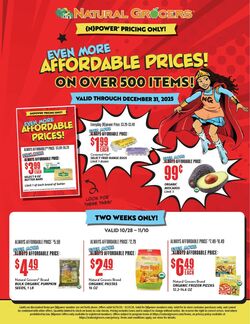
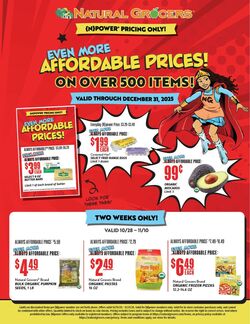
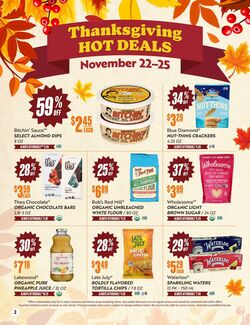
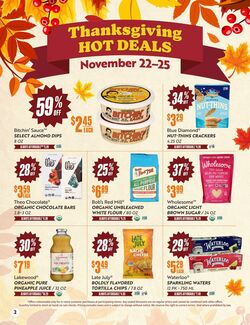
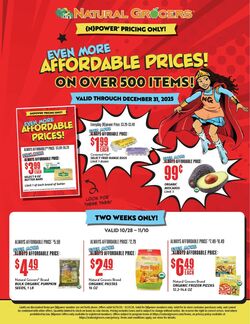
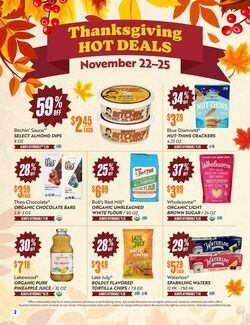
Current weekly ad Natural Grocers - Valid from 07/09 to 08/20 - Page nb 33

Advertisement
Advertisement
Advertisement


Advertisement
Weekly ad Natural Grocers 07/09/2025 - 08/20/2025
Weekly ad Aldi - In Store Ad Jun 3, 2026 - Jun 9, 2026
Aldi - In Store Ad
Jun 3, 2026 - Jun 9, 2026
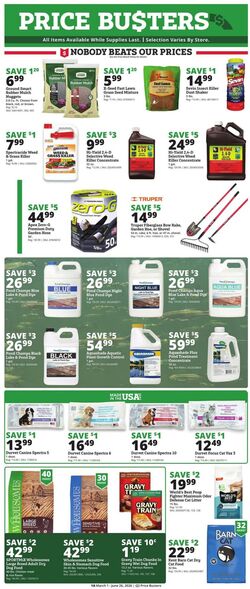
Weekly ad Rural King - Circular Mar 1, 2026 - Jun 26, 2026
Rural King - Circular
Mar 1, 2026 - Jun 26, 2026
Weekly ad Rural King - Circular Mar 1, 2026 - Jun 26, 2026
Rural King - Circular
Mar 1, 2026 - Jun 26, 2026
Weekly ad Rural King - Circular Mar 1, 2026 - Jun 26, 2026
Rural King - Circular
Mar 1, 2026 - Jun 26, 2026
See next flyer
Advertisement
Advertisement


Advertisement

Products in this weekly ad

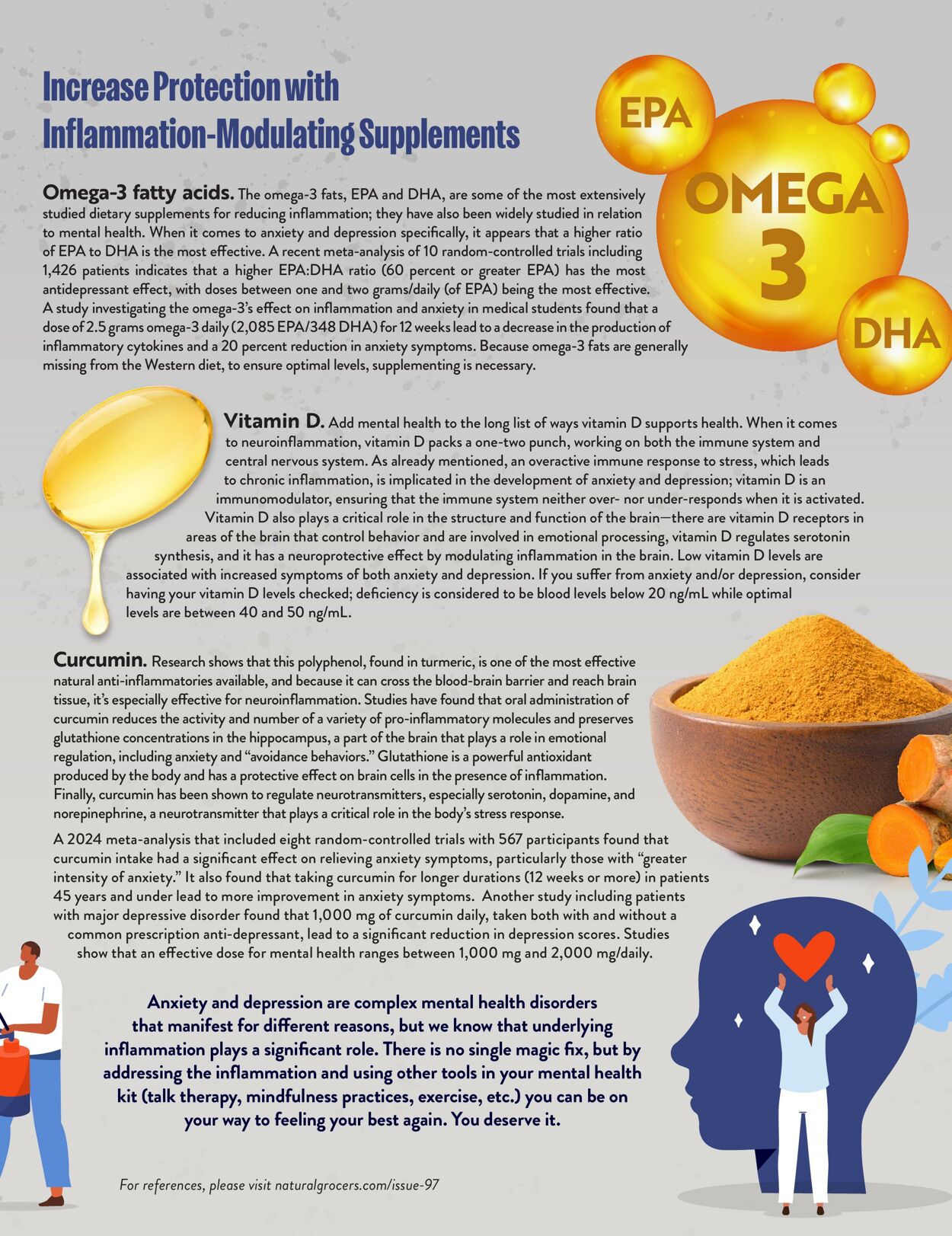
Increase Protection with Inflammation-Modulating Supplements Omega-3 fatty acids. The omega-3 fats, EPA and DHA, are some of the most extensively studied dietary supplements for reducing inflammation; they have also been widely studied in relation to mental health. When it comes to anxiety and depression specifically, it appears that a higher ratio of EPA to DHA is the most effective. A recent meta-analysis of 10 random-controlled trials including 1,426 patients indicates that a higher EPA:DHA ratio (60 percent or greater EPA) has the most antidepressant effect, with doses between one and two grams/daily (of EPA) being the most effective. A study investigating the omega-3's effect on inflammation and anxiety in medical students found that a dose of 2.5 grams omega-3 daily (2,085 EPA/348 DHA) for 12 weeks lead toa decrease in the production of inflammatory cytokines and a 20 percent reduction in anxiety symptoms. Because omega-3 fats are generally missing from the Western diet, to ensure optimal levels, supplementing is necessary. Vitamin D. Add mental health to the long list of ways vitamin D supports health. When it comes to neuroinflammation, vitamin D packs a one-two punch, working on both the immune system and central nervous system. As already mentioned, an overactive immune response to stress, which leads to chronic inflammation, is implicated in the development of anxiety and depression; vitamin D is an immunomodulator, ensuring that the immune system neither over- nor under-responds when it is activated. Vitamin D also plays a critical role in the structure and function of the brain—there are vitamin D receptors in areas of the brain that control behavior and are involved in emotional processing, vitamin D regulates serotonin synthesis, and it has a neuroprotective effect by modulating inflammation in the brain. Low vitamin D levels are associated with increased symptoms of both anxiety and depression. If you suffer from anxiety and/or depression, consider having your vitamin D levels checked; deficiency is considered to be blood levels below 20 ng/mL while optimal | Ievels are between 40 and 50 ng/mL. Curcumin. Research shows that this polyphenol, found in turmeric, is one of the most effective natural anti-inflammatories available, and because it can cross the blood-brain barrier and reach brain tissue, it’s especially effective for neuroinflammation. Studies have found that oral administration of curcumin reduces the activity and number of a variety of pro-inflammatory molecules and preserves glutathione concentrations in the hippocampus, a part of the brain that plays a role in emotional regulation, including anxiety and “avoidance behaviors.” Glutathione is a powerful antioxidant produced by the body and has a protective effect on brain cells in the presence of inflammation. Finally, curcumin has been shown to regulate neurotransmitters, especially serotonin, dopamine, and norepinephrine, a neurotransmitter that plays a critical role in the body’s stress response. A 2024 meta-analysis that included eight random-controlled trials with 567 participants found that curcumin intake had a significant effect on relieving anxiety symptoms, particularly those with “greater intensity of anxiety.” It also found that taking curcumin for longer durations (12 weeks or more) in patients AS years and under lead to more improvement in anxiety symptoms. Another study including patients with major depressive disorder found that 1,000 mg of curcumin daily, taken both with and without a common prescription anti-depressant, lead to a significant reduction in depression scores. Studies 3 show that an effective dose for mental health ranges between 1,000 mg and 2,000 mg/daily. Anxiety and depression are complex mental health disorders iA that manifest for different reasons, but we know that underlying inflammation plays a significant role. There is no single magic fix, but by addressing the inflammation and using other tools in your mental health kit (talk therapy, mindfulness practices, exercise, etc.) you can be on your way to feeling your best again. You deserve it. For references, please visit naturalgrocers.com/issue-97


Latest weekly ads

Advertisement
Increase Protection with Inflammation-Modulating Supplements Omega-3 fatty acids. The omega-3 fats, EPA and DHA, are some of the most extensively studied dietary supplements for reducing inflammation; they have also been widely studied in relation to mental health. When it comes to anxiety and depression specifically, it appears that a higher ratio of EPA to DHA is the most effective. A recent meta-analysis of 10 random-controlled trials including 1,426 patients indicates that a higher EPA:DHA ratio (60 percent or greater EPA) has the most antidepressant effect, with doses between one and two grams/daily (of EPA) being the most effective. A study investigating the omega-3's effect on inflammation and anxiety in medical students found that a dose of 2.5 grams omega-3 daily (2,085 EPA/348 DHA) for 12 weeks lead toa decrease in the production of inflammatory cytokines and a 20 percent reduction in anxiety symptoms. Because omega-3 fats are generally missing from the Western diet, to ensure optimal levels, supplementing is necessary. Vitamin D. Add mental health to the long list of ways vitamin D supports health. When it comes to neuroinflammation, vitamin D packs a one-two punch, working on both the immune system and central nervous system. As already mentioned, an overactive immune response to stress, which leads to chronic inflammation, is implicated in the development of anxiety and depression; vitamin D is an immunomodulator, ensuring that the immune system neither over- nor under-responds when it is activated. Vitamin D also plays a critical role in the structure and function of the brain—there are vitamin D receptors in areas of the brain that control behavior and are involved in emotional processing, vitamin D regulates serotonin synthesis, and it has a neuroprotective effect by modulating inflammation in the brain. Low vitamin D levels are associated with increased symptoms of both anxiety and depression. If you suffer from anxiety and/or depression, consider having your vitamin D levels checked; deficiency is considered to be blood levels below 20 ng/mL while optimal | Ievels are between 40 and 50 ng/mL. Curcumin. Research shows that this polyphenol, found in turmeric, is one of the most effective natural anti-inflammatories available, and because it can cross the blood-brain barrier and reach brain tissue, it’s especially effective for neuroinflammation. Studies have found that oral administration of curcumin reduces the activity and number of a variety of pro-inflammatory molecules and preserves glutathione concentrations in the hippocampus, a part of the brain that plays a role in emotional regulation, including anxiety and “avoidance behaviors.” Glutathione is a powerful antioxidant produced by the body and has a protective effect on brain cells in the presence of inflammation. Finally, curcumin has been shown to regulate neurotransmitters, especially serotonin, dopamine, and norepinephrine, a neurotransmitter that plays a critical role in the body’s stress response. A 2024 meta-analysis that included eight random-controlled trials with 567 participants found that curcumin intake had a significant effect on relieving anxiety symptoms, particularly those with “greater intensity of anxiety.” It also found that taking curcumin for longer durations (12 weeks or more) in patients AS years and under lead to more improvement in anxiety symptoms. Another study including patients with major depressive disorder found that 1,000 mg of curcumin daily, taken both with and without a common prescription anti-depressant, lead to a significant reduction in depression scores. Studies 3 show that an effective dose for mental health ranges between 1,000 mg and 2,000 mg/daily. Anxiety and depression are complex mental health disorders iA that manifest for different reasons, but we know that underlying inflammation plays a significant role. There is no single magic fix, but by addressing the inflammation and using other tools in your mental health kit (talk therapy, mindfulness practices, exercise, etc.) you can be on your way to feeling your best again. You deserve it. For references, please visit naturalgrocers.com/issue-97

Advertisement
Advertisement
Advertisement
Advertisement

If you continue to browse this website, you accept the use of cookies.

Name Details