The search has to be between 2 and 50 characters

Advertisement
Advertisement
Advertisement

Current weekly ad Natural Grocers - Valid from 08/05 to 08/21 - Page nb 46

Advertisement
Advertisement
Advertisement


Advertisement
Weekly ad Natural Grocers 08/05/2025 - 08/21/2025
Weekly ad Rural King - Circular Mar 1, 2026 - Jun 26, 2026
Rural King - Circular
Mar 1, 2026 - Jun 26, 2026
Weekly ad Rural King - Circular Mar 1, 2026 - Jun 26, 2026
Rural King - Circular
Mar 1, 2026 - Jun 26, 2026
Weekly ad Aldi - In Store Ad Jun 3, 2026 - Jun 9, 2026
Aldi - In Store Ad
Jun 3, 2026 - Jun 9, 2026
Weekly ad Rural King - Circular Mar 1, 2026 - Jun 26, 2026
Rural King - Circular
Mar 1, 2026 - Jun 26, 2026
See next flyer
Advertisement
Advertisement


Advertisement

Products in this weekly ad

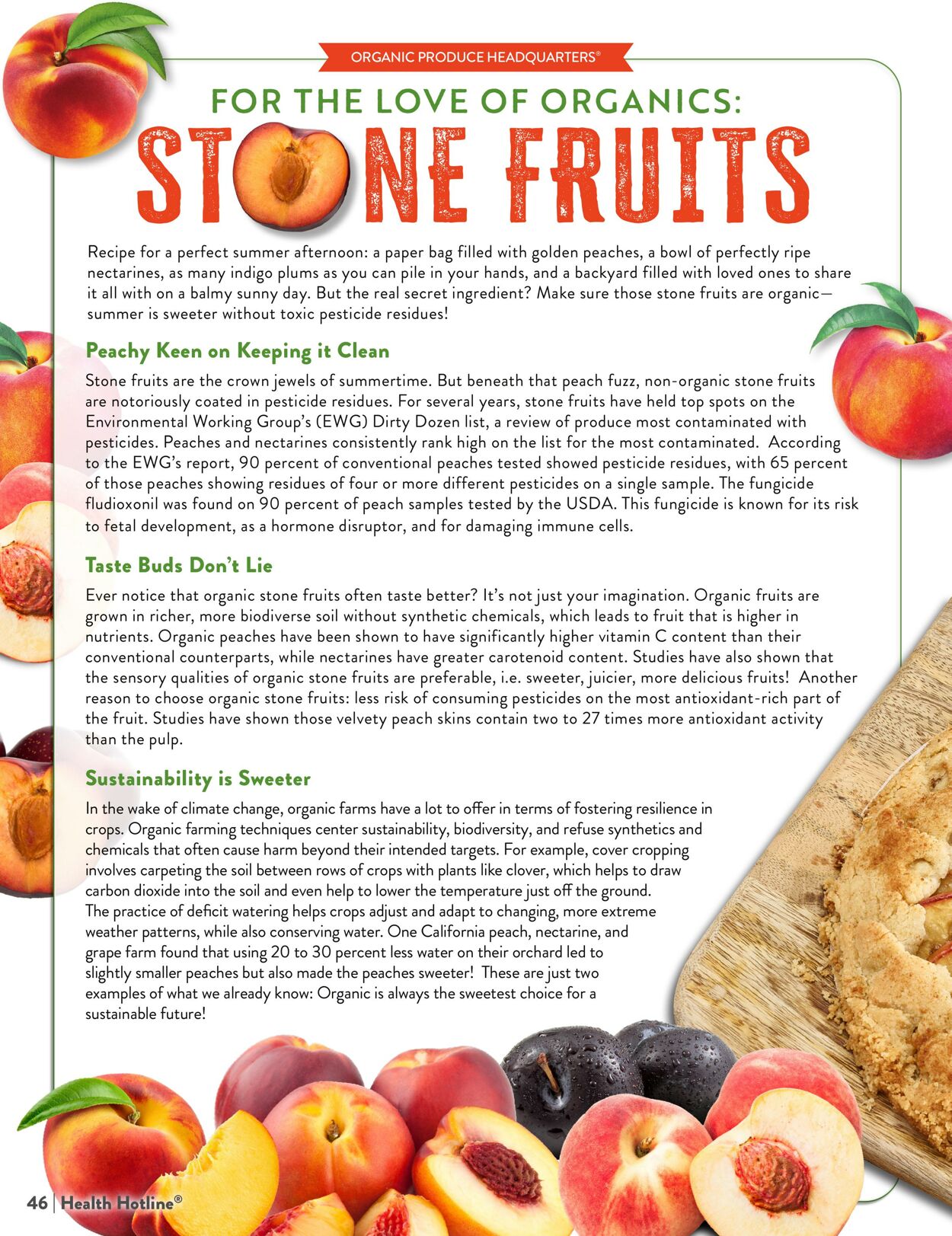
46 | Health Hotline® Recipe for a perfect summer afternoon: a paper bag filled with golden peaches, a bowl of perfectly ripe nectarines, as many indigo plums as you can pile in your hands, and a backyard filled with loved ones to share it all with on a balmy sunny day. But the real secret ingredient? Make sure those stone fruits are organic— summer is sweeter without toxic pesticide residues! Peachy Keen on Keeping it Clean Stone fruits are the crown jewels of summertime. But beneath that peach fuzz, non-organic stone fruits are notoriously coated in pesticide residues. For several years, stone fruits have held top spots on the Environmental Working Group’s (EWG) Dirty Dozen list, a review of produce most contaminated with pesticides. Peaches and nectarines consistently rank high on the list for the most contaminated. According 2 SS to the EWG’s report, 90 percent of conventional peaches tested showed pesticide residues, with 65 percent ™ of those peaches showing residues of four or more different pesticides on a single sample. The fungicide fludioxonil was found on 90 percent of peach samples tested by the USDA. This fungicide is known for its risk to fetal development, as a hormone disruptor, and for damaging immune cells. Taste Buds Don’t Lie Ever notice that organic stone fruits often taste better? It’s not just your imagination. Organic fruits are grown in richer, more biodiverse soil without synthetic chemicals, which leads to fruit that is higher in nutrients. Organic peaches have been shown to have significantly higher vitamin C content than their conventional counterparts, while nectarines have greater carotenoid content. Studies have also shown that the sensory qualities of organic stone fruits are preferable, i.e. sweeter, juicier, more delicious fruits! Another reason to choose organic stone fruits: less risk of consuming pesticides on the most antioxidant-rich part of the fruit. Studies have shown those velvety peach skins contain two to 27 times more antioxidant activity than the pulp. Sustainability is Sweeter In the wake of climate change, organic farms have a lot to offer in terms of fostering resilience in crops. Organic farming techniques center sustainability, biodiversity, and refuse synthetics and chemicals that often cause harm beyond their intended targets. For example, cover cropping involves carpeting the soil between rows of crops with plants like clover, which helps to draw carbon dioxide into the soil and even help to lower the temperature just off the ground. The practice of deficit watering helps crops adjust and adapt to changing, more extreme weather patterns, while also conserving water. One California peach, nectarine, and grape farm found that using 20 to 30 percent less water on their orchard led to slightly smaller peaches but also made the peaches sweeter! These are just two examples of what we already know: Organic is always the sweetest choice for a sustainable future! ene fe


Latest weekly ads

Advertisement
46 | Health Hotline® Recipe for a perfect summer afternoon: a paper bag filled with golden peaches, a bowl of perfectly ripe nectarines, as many indigo plums as you can pile in your hands, and a backyard filled with loved ones to share it all with on a balmy sunny day. But the real secret ingredient? Make sure those stone fruits are organic— summer is sweeter without toxic pesticide residues! Peachy Keen on Keeping it Clean Stone fruits are the crown jewels of summertime. But beneath that peach fuzz, non-organic stone fruits are notoriously coated in pesticide residues. For several years, stone fruits have held top spots on the Environmental Working Group’s (EWG) Dirty Dozen list, a review of produce most contaminated with pesticides. Peaches and nectarines consistently rank high on the list for the most contaminated. According 2 SS to the EWG’s report, 90 percent of conventional peaches tested showed pesticide residues, with 65 percent ™ of those peaches showing residues of four or more different pesticides on a single sample. The fungicide fludioxonil was found on 90 percent of peach samples tested by the USDA. This fungicide is known for its risk to fetal development, as a hormone disruptor, and for damaging immune cells. Taste Buds Don’t Lie Ever notice that organic stone fruits often taste better? It’s not just your imagination. Organic fruits are grown in richer, more biodiverse soil without synthetic chemicals, which leads to fruit that is higher in nutrients. Organic peaches have been shown to have significantly higher vitamin C content than their conventional counterparts, while nectarines have greater carotenoid content. Studies have also shown that the sensory qualities of organic stone fruits are preferable, i.e. sweeter, juicier, more delicious fruits! Another reason to choose organic stone fruits: less risk of consuming pesticides on the most antioxidant-rich part of the fruit. Studies have shown those velvety peach skins contain two to 27 times more antioxidant activity than the pulp. Sustainability is Sweeter In the wake of climate change, organic farms have a lot to offer in terms of fostering resilience in crops. Organic farming techniques center sustainability, biodiversity, and refuse synthetics and chemicals that often cause harm beyond their intended targets. For example, cover cropping involves carpeting the soil between rows of crops with plants like clover, which helps to draw carbon dioxide into the soil and even help to lower the temperature just off the ground. The practice of deficit watering helps crops adjust and adapt to changing, more extreme weather patterns, while also conserving water. One California peach, nectarine, and grape farm found that using 20 to 30 percent less water on their orchard led to slightly smaller peaches but also made the peaches sweeter! These are just two examples of what we already know: Organic is always the sweetest choice for a sustainable future! ene fe

Advertisement
Advertisement
Advertisement
Advertisement

If you continue to browse this website, you accept the use of cookies.

Name Details